
Table of Contents
ToggleI remember walking into my first yoga class feeling completely overwhelmed. Everyone around me seemed to flow effortlessly through poses while I struggled to keep my balance. I wanted that graceful connection between body and mind that experienced practitioners displayed.
Through my journey, I discovered that yoga isn’t about perfect poses or competition. It’s about finding harmony within yourself. The practice becomes a beautiful dance between movement and stillness.
Wanting to enhance your yoga experience is completely natural. In this guide, I’ll share practical insights that transformed my practice. These tips helped me build strength, improve flexibility, and find deeper peace.
We’ll explore breathing techniques, setting realistic goals, and creating consistent routines. Whether you practice at home or in class, these approaches can help you progress week after week.
*This article may contain affiliate links that help support our content at no extra cost to you.
How to Get Better at Yoga: Start by Defining Your "Why"
Many people begin their yoga journey without a clear purpose. They might attend a yoga class or try some yoga poses without understanding their deeper motivation. I discovered that having a strong “why” transforms the entire experience.
Your personal reason for practicing creates lasting engagement. It turns simple stretching into meaningful growth. This connection between body and mind becomes your foundation.
Connecting Your Practice to a Personal Goal
Ask yourself what you truly want from your practice. Is it relief from back pain? Improved flexibility? Mental clarity? Your goals should inspire you every day.
I found that writing down my intentions helped tremendously. Here are common motivations I’ve observed:
- Physical healing from chronic pain
- Mental health and stress reduction
- Spiritual connection and self-awareness
- Building strength for other activities
Each motivation requires a different approach. A focus on pain relief might emphasize gentle poses like bow pose. Mental clarity practices often prioritize focusing breath techniques.
My Journey: Finding Mental Clarity on the Mat
My primary goal was never physical perfection. I sought mental space and self-connection. The mat became my sanctuary for processing thoughts and emotions.
Yoga helped me develop a deeper sense of control over my reactions, not just my body.
This mental shift made my practice sustainable. I stopped comparing myself to others in classes. I focused instead on my personal growth process.
Keeping Your Motivation Alive
Maintaining enthusiasm requires regular reflection. I recommend setting aside time each week to revisit your goals. Celebrate small victories along the way.
Here’s a simple framework I use:
| Goal Type | Practice Focus | Timeline |
|---|---|---|
| Pain Management | Restorative poses, gentle flow | 4-6 weeks |
| Flexibility | Deep stretching, longer holds | 8-12 weeks |
| Mental Clarity | Breath work, meditation | Ongoing |
Create visual reminders of your purpose. A vision board or phone background can reinforce your commitment. When motivation wanes, these reminders bring you back to your original intention.
Remember that plateaus are natural. They signal growth, not failure. Adjust your schedule or try new classes when you feel stuck. The journey itself matters more than any single destination.
Build a Foundation with Strength and Flexibility Training
Many practitioners focus only on stretching, but true progress requires both strength and flexibility. I learned this balance through personal experience. Building muscle support protects joints during deep stretches.
This dual approach creates sustainable growth in your practice. Strong muscles provide stability while flexible tissues allow greater range. Together they form the foundation for advanced poses.
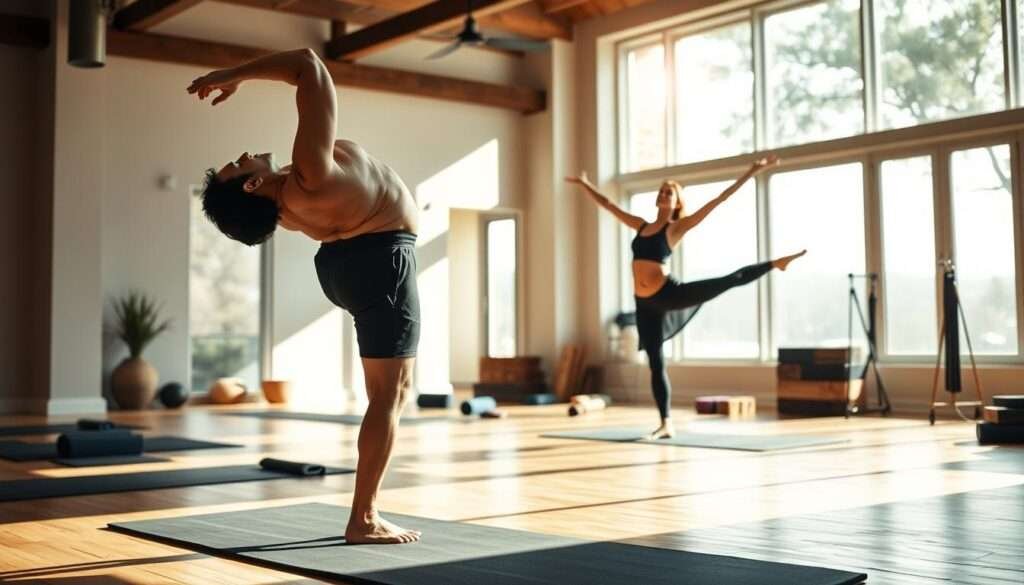
Essential Poses for Back Pain and Flexibility
Back discomfort often improves with targeted movements. These poses gently strengthen while increasing spinal mobility.
Cobra Pose: Lie face down, palms under shoulders. Press upward, keeping hips grounded. Hold for 3-5 breaths. This extends the spine gently.
Upward-Facing Dog: From cobra, straighten arms fully. Lift thighs off the mat, pressing through hands and feet. This builds back strength.
Bow Pose: Reach back to hold ankles while lying face down. Lift chest and thighs simultaneously. This opens the entire front body.
Key Stretches for Hamstring Health
Tight hamstrings limit many forward bends. These stretches improve flexibility safely.
Forward Fold: Stand with feet hip-width. Hinge at hips, letting head hang heavy. Keep knees slightly bent if needed.
Half Split: From lunge position, straighten front leg. Fold over the extended leg, keeping hips square.
Head-to-Knee Forward Bend: Sit with one leg extended, other foot against inner thigh. Fold over straight leg, reaching for foot.
Your Stretching FAQ Answered
How often should I stretch? Daily practice brings fastest results. Three to four sessions weekly maintains progress.
How long should I hold stretches? Minimum 25-30 seconds per side. Gradually increase to 60 seconds as flexibility improves.
Should stretching hurt? Never push into sharp pain. Mild discomfort signals growth, but pain indicates overstretching.
Why stretch after workouts? Movement creates lactic acid in muscles. Stretching helps release this buildup, reducing soreness.
| Pose Name | Primary Benefit | Difficulty Level | Recommended Frequency |
|---|---|---|---|
| Cobra Pose | Spinal Extension | Beginner | Daily |
| Upward-Facing Dog | Back Strength | Intermediate | 3-4 times weekly |
| Bow Pose | Full Front Opening | Advanced | 2-3 times weekly |
| Forward Fold | Hamstring Length | Beginner | Daily |
| Half Split | Targeted Stretch | Intermediate | 3-5 times weekly |
Recommended Gear for Home Practice
Quality equipment enhances home sessions. These tools support proper alignment and progression.
Yoga mats with alignment lines help position hands and feet correctly. Look for non-slip surfaces for safety.
Foam rollers release muscle tension before stretching. They prepare the body for deeper work.
Yoga blocks bring the floor closer in forward folds. Use them under hands for support.
Stretching straps assist in reaching limbs. They help maintain proper form during challenging poses.
Start with basic props and add equipment as your practice evolves. Each tool serves specific purposes in development.
Master Your Breath to Unlock Your Practice
Breathing transforms yoga from exercise into meditation. I discovered this truth during a challenging class. My teacher kept reminding me to focus on my breath.
This simple shift changed everything. Instead of fighting through poses, I flowed with them. The connection between movement and awareness deepened.
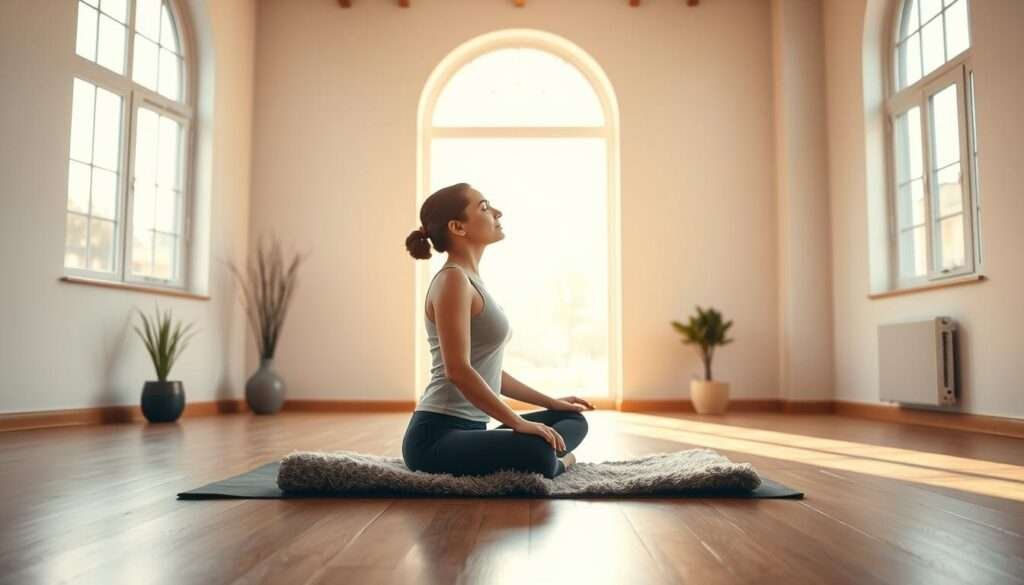
The Bridge Between Body and Mind
Breath creates a direct link between physical sensations and mental states. Each inhale brings energy. Each exhale releases tension.
This rhythm calms the nervous system. It turns stress into stillness. The mat becomes a place of peace.
I learned that proper breathing helps hold poses longer. It builds endurance in muscles. Mental focus improves dramatically.
When you control your breath, you control your entire experience on the mat.
Practical Breathing Techniques to Try Today
Start with these simple methods. They work well for home practice or class settings.
Deep Belly Breathing: Lie comfortably on your back. Place one hand on your belly. Inhale deeply through your nose.
Feel your abdomen rise. Exhale slowly through your mouth. Repeat for five cycles.
Ujjayi Breath: Constrict the back of your throat slightly. Inhale and exhale through your nose. Create a soft ocean sound.
Alternate Nostril Breathing: Use your right thumb to close your right nostril. Inhale through the left nostril. Close left nostril with your ring finger.
Exhale through the right nostril. Continue alternating for several rounds.
4-7-8 Technique: Inhale for four counts. Hold your breath for seven counts. Exhale for eight counts.
| Technique | Primary Benefit | Difficulty | Best Time to Use |
|---|---|---|---|
| Deep Belly Breathing | Full Oxygenation | Beginner | Before practice |
| Ujjayi Breath | Heat Building | Intermediate | During flow |
| Alternate Nostril | Balance | Intermediate | Morning routine |
| 4-7-8 Technique | Stress Reduction | Advanced | Evening relaxation |
Using Breath to Conquer Challenging Poses
Difficult positions become easier with breath control. I use this approach in bow pose and other advanced asanas.
Inhale before moving into the pose. Exhale during the deepest part of the stretch. Maintain steady breathing throughout.
This rhythm prevents muscle panic. It allows for greater flexibility over time. The body learns to trust the process.
I recommend breath-focused apps for daily training. They help develop consistent patterns. Pulse oximeters can monitor oxygen levels during practice.
Remember that breath awareness reduces pain perception. It creates harmony between effort and ease. Your entire practice transforms through this connection.
Commit to a Consistent and Scheduled Practice
The rhythm of regular practice creates deeper transformation than marathon sessions. I learned this through my own journey when sporadic efforts yielded little progress. Steady commitment builds muscle memory and mental focus.
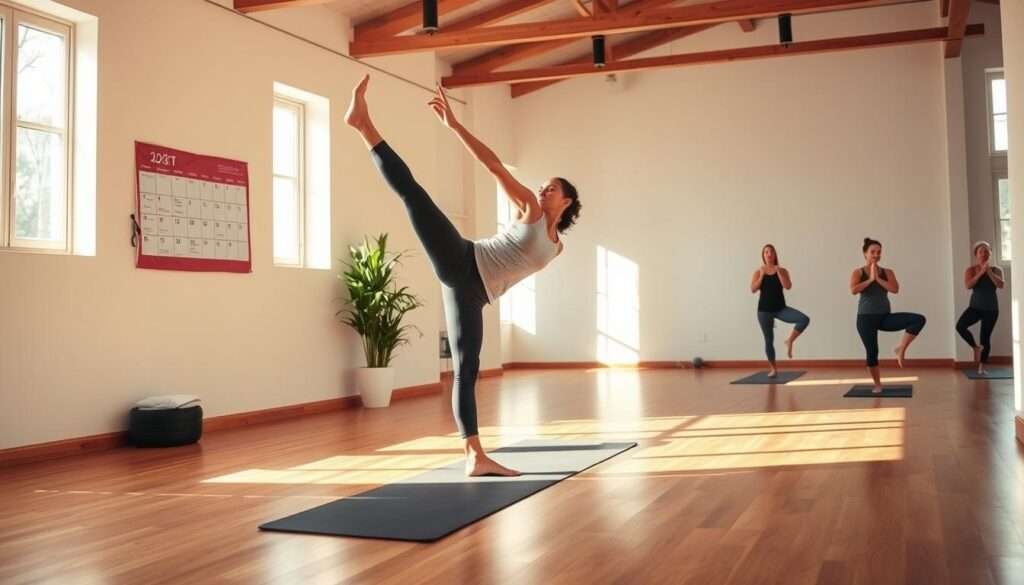
Neuroscience supports this approach. The brain forms stronger neural pathways through repetition. This makes poses feel more natural over time.
Why Regularity Trumps Duration
Short daily sessions outperform occasional long classes. Your body adapts better to frequent stimulation. The mind develops deeper concentration through regular engagement.
Five minutes daily builds better habits than hour-long weekly sessions. This consistency creates lasting change in your practice. The connection between body and mind strengthens with repetition.
Creating a Sustainable Weekly Routine
Start with realistic time commitments. Three twenty-minute sessions per week work well for beginners. Balance different yoga styles throughout your week.
Consider these sample routines:
| Level | Monday | Wednesday | Friday | Weekend |
|---|---|---|---|---|
| Beginner | Gentle Flow (20 min) | Restorative (15 min) | Basic Poses (25 min) | Rest Day |
| Intermediate | Vinyasa (30 min) | Strength (25 min) | Flexibility (30 min) | Meditation (15 min) |
| Advanced | Power Yoga (45 min) | Inversion Practice (40 min) | Deep Stretching (35 min) | Self-Practice (60 min) |
Align your schedule with personal goals. Flexibility training might require more frequent sessions. Strength building benefits from adequate recovery days.
Tools to Help You Stay on Track
Digital planners make consistency easier. I use Google Calendar for scheduling sessions. Set reminders thirty minutes before practice time.
These apps help maintain routine:
- MyFitnessPal for tracking consistency
- Headspace for meditation reminders
- Yoga Studio for guided sessions
- HabitBull for streak tracking
Create a dedicated space at home. Even a corner with your mat works perfectly. This visual cue reinforces your commitment daily.
Overcome obstacles with preparation. Lay out clothes the night before. Keep your mat visible as a constant reminder.
Consistency transforms aspiration into actual transformation.
The process becomes automatic over time. You’ll find yourself drawn to your mat naturally. This regular engagement deepens every aspect of your practice.
Embrace the Entire Process, Including Final Relaxation
My breakthrough came when I stopped rushing through the final moments of my yoga practice. The most profound changes often happen during quiet integration. This complete approach honors both effort and ease.
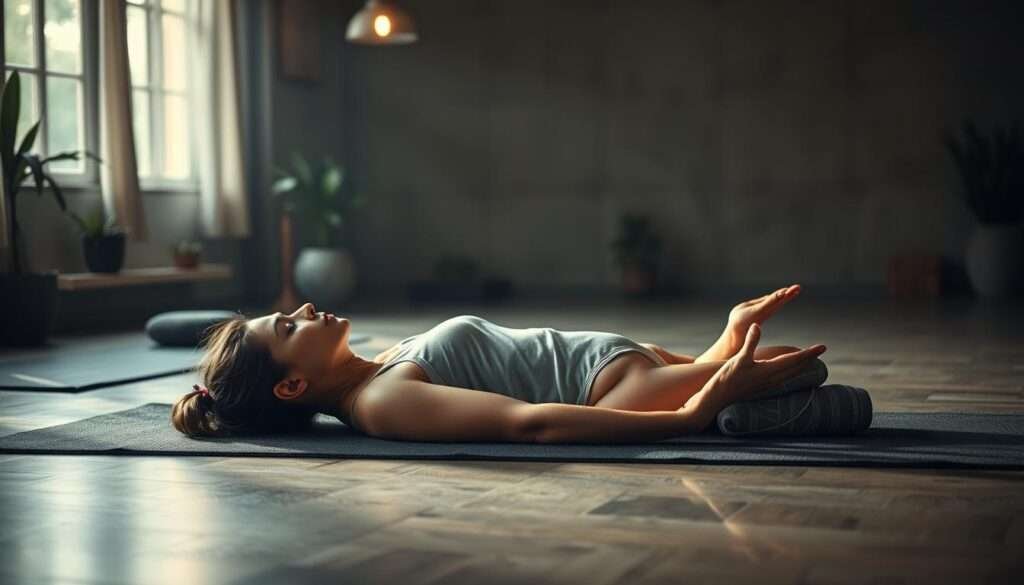
True growth happens when we value every part of the journey. The final relaxation pose isn’t an afterthought. It’s where the body absorbs all the benefits of your work.
Don't Skip Savasana: The Power of Corpse Pose
Savasana looks deceptively simple but delivers powerful benefits. This pose allows your system to reset after physical exertion. It’s active relaxation that integrates mind and body.
During Savasana, your heart rate returns to normal. Muscles release residual tension. The nervous system shifts into recovery mode.
Here’s how to practice Savasana effectively:
- Lie flat on your back with arms slightly away from your sides
- Allow your feet to fall open naturally
- Close your eyes and bring attention to your natural breathing pattern
- Release control over your body completely
- Remain still for five to ten minutes
This pose helps “download” the benefits of your practice. It’s when the body memorizes new patterns of movement and awareness.
Tracking Progress: The Value of Photos and Patience
Visual documentation transformed my understanding of progress. Photos provide objective evidence of improvement that we often miss day-to-day.
I recommend monthly photos of key poses like bow pose or forward folds. These images show subtle changes in alignment and flexibility. They celebrate small victories that might otherwise go unnoticed.
Effective tracking methods include:
| Method | Frequency | What to Track | Tools Needed |
|---|---|---|---|
| Photo Documentation | Monthly | Alignment in key poses | Smartphone, tripod |
| Practice Journal | After each session | Mental state, physical sensations | Notebook or app |
| Measurement Tracking | Quarterly | Flexibility ranges | Measuring tape |
| Video Analysis | Every 2 months | Flow sequences | Video camera, yoga app |
Patience becomes your greatest ally in this process. Progress often happens in subtle shifts rather than dramatic breakthroughs.
Finding Harmony, Not Just Perfection
The deepest transformation occurs when we release the pursuit of perfect poses. Instead, we find harmony between strength and softness. This balance creates sustainable growth.
Yoga philosophy teaches us to honor our current abilities while gently expanding them. Each practice becomes a conversation between challenge and acceptance.
The mat becomes a mirror reflecting not what we should be, but who we are in this moment.
This perspective shift reduces frustration during difficult phases. It helps us appreciate the journey itself rather than fixating on destinations.
Recommended tools for deepening this approach:
- Yoga photography guides for proper alignment documentation
- Progress tracking apps like Yoga Tracker or Asana Rebel
- Bolsters and eye pillows for enhanced Savasana experience
- Meditation timers for gradually increasing relaxation time
Remember that the true measure of progress isn’t just physical flexibility. It’s the growing sense of peace that accompanies your practice both on and off the mat.
Conclusion: Your Path to a Rewarding Yoga Journey
These six approaches transformed my personal yoga journey. They helped me build strength and find mental clarity.
Remember that progress requires patience. Celebrate small victories along the way. Your dedication will yield results over time.
Consider joining a local class or online community. Sharing experiences with others boosts motivation. It makes maintaining consistency easier.
I’d love to hear about your experiences. Please share your own insights in the comments below. Let’s continue learning together!