
Table of Contents
ToggleI used to burn out by midafternoon, hungry and unfocused after rushed workdays. I changed that by setting a simple goal: hit 30–50 grams of protein at lunch so I stay energized and skip cravings.
In this guide I show exactly how I plan, shop, and batch-cook so you can build a week of grab-and-go midday meals without losing flavor or nutrition.
I follow a repeatable formula: pick 2–3 protein anchors, roast a tray of veggies, cook one grain, then assemble bowls, salads, wraps, or hot skillets in minutes.
Each idea includes key ingredients, step-by-step assembly, protein per serving, and smart swaps. I also share storage tips, reheating notes, and quick time-savers like rotisserie chicken, canned fish, and pre-cooked lentils.
Key Takeaways
- I aim for 30–50 g protein per lunch to boost energy and curb cravings.
- My weekly formula: 2–3 proteins + roasted veggies + one grain = fast assembly.
- Each entry lists ingredients, steps, protein counts, and swaps.
- Use time-savers like rotisserie chicken and canned salmon for quick meals.
- Label portions with protein and reheating notes for easy weekday choices.
Why I Meal Prep High-Protein Lunches on Busy Weekdays
I started packing a bigger protein portion at midday and noticed a clear lift in focus and stamina. That small change delivers steady energy and keeps me from grazing through the afternoon.
Benefits I notice:
- I have higher afternoon energy and fewer cravings between meetings or runs errands.
- I focus better when my lunch pairs a solid protein with colorful produce — like a crunchy chicken salad or a grain bowl.
- Aiming for 30–50 grams protein per serving helps me avoid snack runs and supports lean muscle with regular strength work.
Practical habits that reinforce the benefits
I build meals around proteins that pack and reheat well: chicken breasts, canned tuna, salmon fillets, meatballs, tofu, or beans.
I keep dressings on the side, use simple portion cues (palm = protein, fist = veggies, cupped hand = grain), and rotate salads and bowls with bold herbs and dressings.
| Lunch Type | Typical Protein | Why I Pick It |
|---|---|---|
| Greek chicken salad | ~50 grams protein | High protein, packs well, vibrant flavors |
| Buffalo chicken salad | ~40 grams protein | Spicy, satisfying, reheats or eats cold |
| Tofu & grain bowl | 26–34 grams protein | Plant-based variety, stores well for the day |
Smart Protein Targets and Facts I Use Right Now
My protein strategy begins with a simple math step and a realistic split. I start with the RDA baseline: 0.8 g/kg body weight, which equals roughly 0.36 g per pound, then I adjust for activity and goals.
How I divide protein across the day:
- I prefer an even spread: breakfast, lunch, and dinner, so I don’t have to cram protein at night.
- Example: a 130 grams protein goal becomes ~30 grams per meal, plus one or two 20-gram snacks if needed.
- One palm of cooked chicken ≈ 25–30 grams protein; a can of tuna is similar; a scoop of Greek yogurt adds 15–20 grams.
I build lunches around protein per serving first, then add a grain and veggies for energy on heavier days. I track trends weekly instead of chasing perfection and keep minimally processed staples most weeks for consistency.
My High-Protein Grocery List for Easy Prep
My cart centers on versatile proteins and a few bold flavors that carry through the week. I shop with a short list of reliable ingredients and small notes on how I use each one.
Protein staples
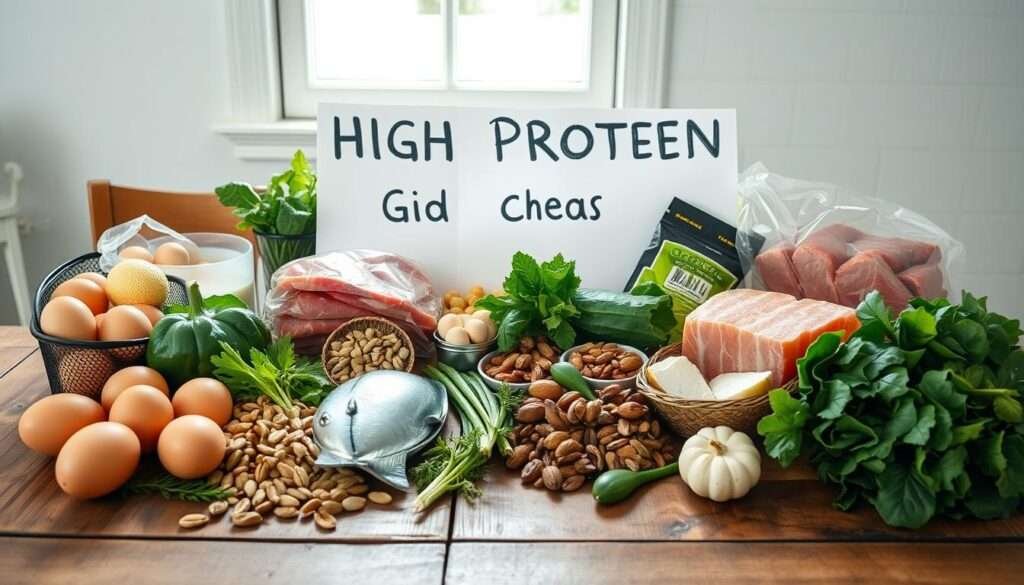
- Chicken — family pack of breasts or thighs for grilling, shredding, and quick salads.
- Turkey and ground beef — base for skillet recipes and meatballs that freeze well.
- Tuna and salmon cans or pouches — mix with olive oil, lemon, and crunchy veg for instant bowls.
- Shrimp — fast sheet-pan or skillet proteins that reheat cleanly.
Plant-forward options
- Tofu, tempeh, and quinoa — swap-ins for meat in many bowls and stir-fries.
- Lentils and beans (chickpeas, black beans) — cook once and use across salads and soups.
- Edamame — frozen, shelled, and ready for a quick protein boost.
Boosters and extras
- Cottage cheese and Greek yogurt — add creaminess and extra protein to dressings and dips.
- Eggs, nuts, and seeds — handy toppers for texture and healthy fats.
- Fresh hardy veg (broccoli, peppers, carrots) and simple seasoning blends so staples don’t taste the same.
| Category | Top Picks | How I Use Them |
|---|---|---|
| Animal proteins | Chicken, turkey, tuna, salmon | Grill, shred, can for quick bowls and wraps |
| Plant proteins | Tofu, tempeh, lentils, quinoa, beans | Stir-fry, roast, or chill for salads |
| Boosters | Cottage cheese, Greek yogurt, eggs, nuts | Dressings, sides, snacks, and topping adds |
Quick prep tip: I roast a tray of mixed veg, batch-cook grains, and poach or bake several protein portions on Sunday. That small step turns these ingredients into many fast easy and fast recipes during the week.
How to Meal Prep High-Protein Lunches for Busy Weekdays
I lock in a simple plan each weekend so cooking is fast and the math is done before I turn on the oven. That small step saves decision fatigue during hectic weekdays.
Weekend workflow I follow:
- I choose the menu and set a clear protein per serving target, then decide how many portions each recipe should yield.
- I batch-cook proteins first — roast chicken breasts, sear ground turkey or beef, or bake salmon — while the oven preheats for veg.
- I roast a big tray of mixed vegetables (broccoli, peppers, zucchini) with olive oil and salt so they match any cuisine.
- I cook a pot of grain like quinoa or brown rice, fluff it, then cool for quick assembly.
- I mix 2–3 sauces or dressings (Greek vinaigrette, sesame-ginger, buffalo or curry) so each recipe tastes distinct.
- I assemble bowls, salads, and wraps in combos I like, keeping crunchy bits and dressings separate to preserve texture.
- I weigh or estimate portions, then label each container with grams protein per serving, the date, and reheating notes.
- I store most lunches for up to four days and freeze stews or chili for future weeks. I also keep one “flex box” of extra protein and veg for plan changes.
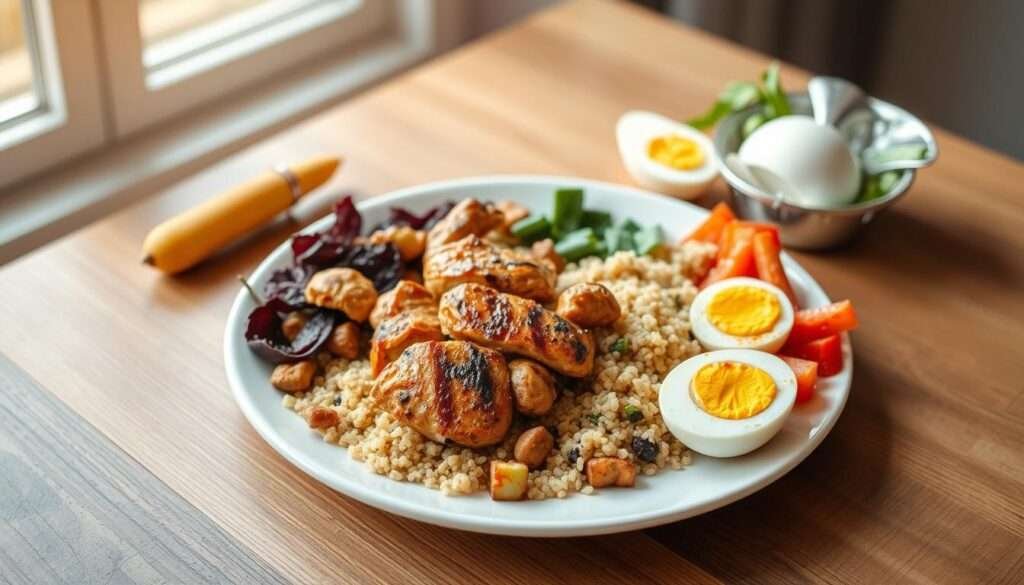
Final step: a quick fridge reset so lunches are visible and ready. With that short routine, every lunch is a predictable, satisfying grab-and-go option.
High-Protein Salad Ideas I Prep Again and Again
I keep a shortlist of go-to salads that pack steady protein and stay bright through the week. Below I give key ingredients, quick assembly steps, estimated grams protein per serving, and storage tips for each favorite.
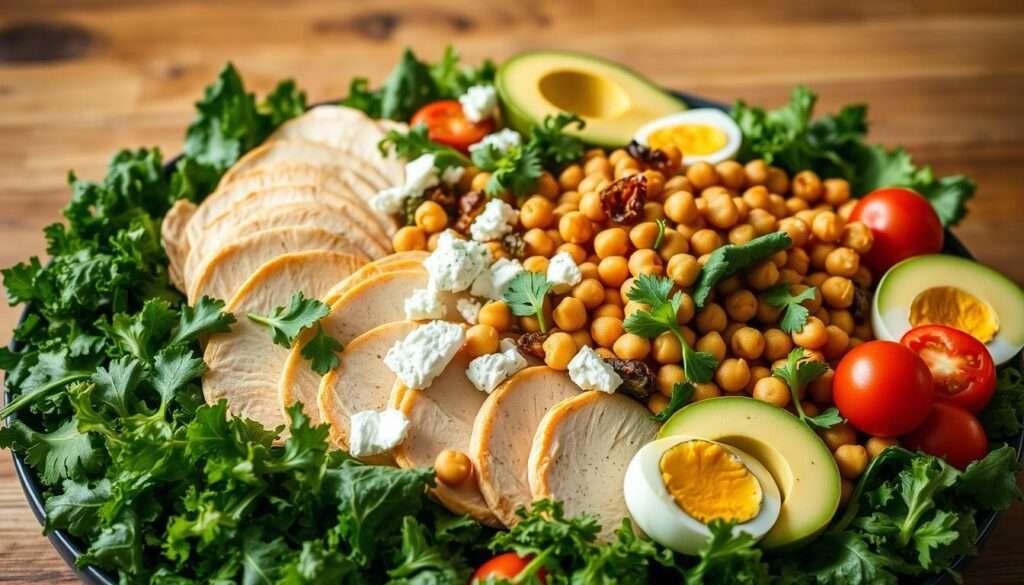
Greek chicken salad with chickpeas, feta, and olives
Key ingredients: baked chicken breast, chickpeas, cucumber, tomato, red onion, kalamata olives, romaine, feta.
- Assemble: chop ingredients, layer sturdy greens on bottom, add chickpeas and chicken, keep dressing separate.
- Fact: portions range from about 32–50 grams protein per serving depending on chicken amount.
- Storage tip: add feta and olives at serving time for best texture; lasts up to four days if dressed lightly.
Chinese-inspired chicken salad with sesame-ginger dressing
Key ingredients: shredded chicken, crunchy cabbage, grated carrot, orange segments, toasted nuts.
- Assemble: pack greens and crispy toppings separately; toss with sesame-ginger dressing at lunch.
- Fact: about 32 grams protein per serving when using a full chicken breast.
- Texture tip: keep nuts and cabbage dry to preserve crunch.
Buffalo chicken chopped salad with grilled chicken
Key ingredients: grilled chicken tossed in buffalo sauce, romaine, tomato, cucumber, celery, creamy dill or ranch-style drizzle.
- Assemble: grill and chill the chicken ahead, pack sauce on the side, slice before serving.
- Fact: roughly 40 grams protein per serving with a generous chicken portion.
- Storage tip: leaves stay crisp when dressing is separate; reheat chicken if you prefer warm.
Strawberry spinach chicken salad with homemade vinaigrette
Key ingredients: grilled chicken, baby spinach, strawberries, red onion, nuts, light vinaigrette.
- Assemble: add berries last and stash vinaigrette in a mini container to avoid sogginess.
- Fact: about 31 grams protein per serving with a standard chicken portion.
- Texture tip: nuts give crunch while spinach keeps the base tender.
| Salad | Protein per serving | Best storage practice |
|---|---|---|
| Greek chicken salad | 32–50 grams protein per | Keep dressing, feta, and olives separate; up to 4 days |
| Chinese-inspired chicken salad | ~32 grams protein per | Store crunchy toppings separately; dress at serving |
| Buffalo chicken chopped salad | ~40 grams protein per | Pack sauce on the side; reheat chicken if desired |
| Strawberry spinach chicken salad | ~31 grams protein per | Keep vinaigrette and berries separate until serving |
Protein-Packed Bowls and Grain Bowls
I organize bowl builds that mix warm grains with crisp greens for fresh midday fuel.
I prep four reliable bowl recipes that travel well and reheat cleanly. Each entry lists ingredients, step-wise assembly, estimated grams protein, and reheating notes so I can grab a balanced lunch fast.
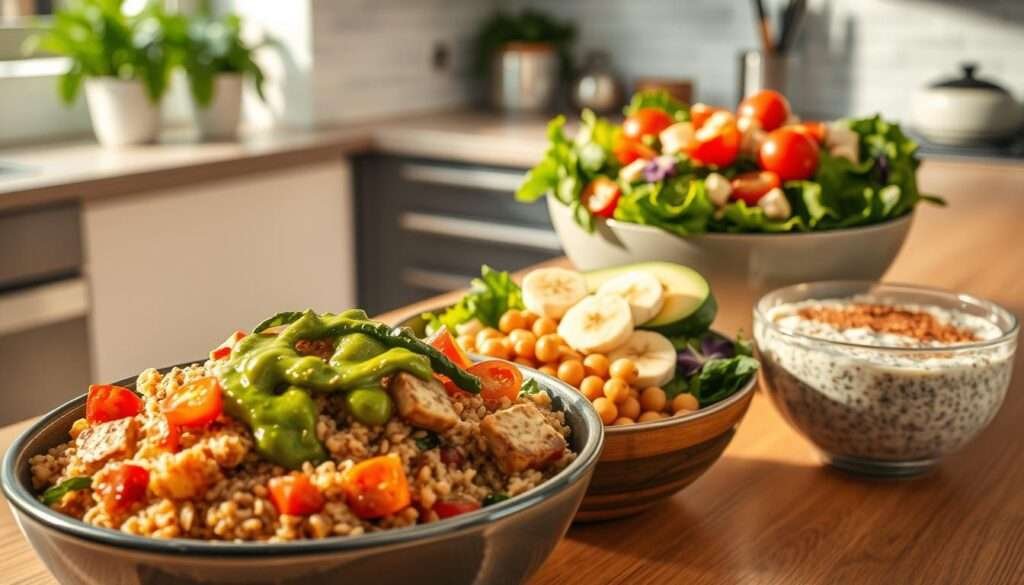
Mediterranean salmon quinoa bowl — ~34 grams protein
Ingredients: cooked quinoa, roasted salmon, mixed greens, cucumber, tomato, feta, olives, tzatziki.
Assembly: layer quinoa, add greens and veggies, top with flaked salmon and a scoop of tzatziki. Pack sauce separately.
Reheat notes: warm quinoa and salmon gently; add greens and tzatziki cold for contrast.
Teriyaki salmon bowl over rice — ~40 grams protein
Ingredients: baked salmon glazed with teriyaki, steamed rice, roasted broccoli, scallions, sesame.
Assembly: rice base, broccoli, salmon, finish with scallions and sesame. Keep sauce aside if packing raw slaw.
Reheat notes: reheat rice and salmon together briefly; add raw veggies and sauce after warming.
Greek chicken meatball bowl with rice — ~32 grams protein
Ingredients: baked greek chicken meatballs, rice, romaine, tomato, cucumber, olives, tzatziki.
Assembly: rice, romaine, meatballs, and fresh veg. Serve with tzatziki on the side.
Reheat notes: thaw or reheat meatballs gently to stay juicy; keep greens chilled.
Thai sweet potato peanut chicken bowl — ~29 grams protein
Ingredients: roasted sweet potato, grilled chicken, chickpeas, crunchy slaw, peanut sauce.
Assembly: grain or farro base, roasted components, chickpeas, drizzle peanut sauce at serving.
Reheat notes: heat only warm parts and add sauce cold to keep roasted texture. Use leftovers as a wrap if desired.
| Recipe | Protein per serving | Best storage practice |
|---|---|---|
| Mediterranean salmon quinoa | ~34 grams protein | Keep tzatziki separate; reheat quinoa and salmon |
| Teriyaki salmon over rice | ~40 grams protein | Pack rice separate when possible; add raw veggies after reheating |
| Greek chicken meatball bowl | ~32 grams protein | Freeze extras; reheat meatballs gently; keep romaine cold |
| Thai sweet potato peanut chicken | ~29 grams protein | Store sauce separately; reheat roasted elements only |
Wraps, Sandwiches, and Lettuce Cups I Rotate
I rotate quick handhelds and lettuce cups that stay bright and travel well. They give me variety without extra fuss and keep midday hunger in check.
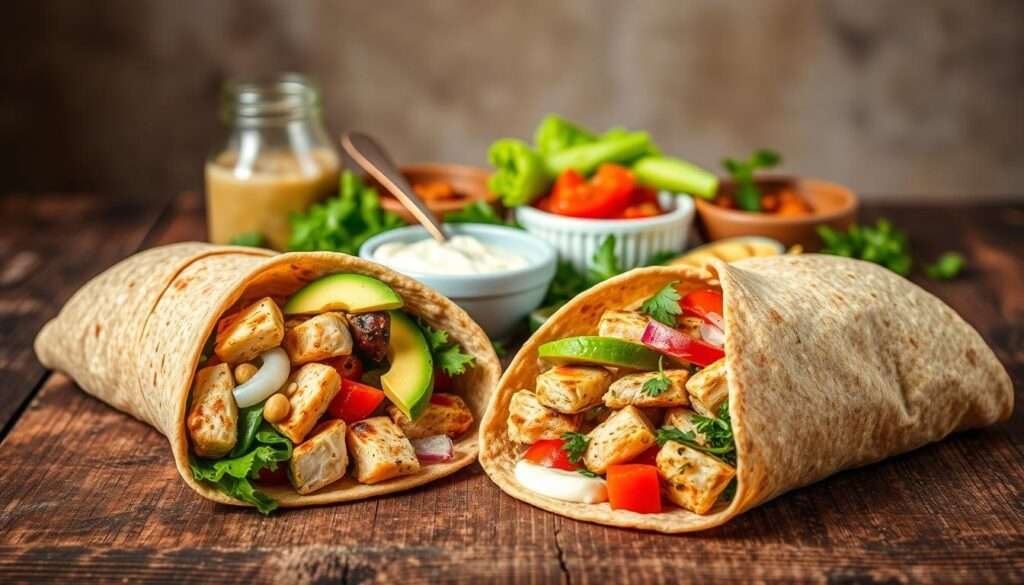
Avocado tuna salad on whole wheat or wraps — ~36 g
Ingredients: canned albacore, ripe avocado, red onion, lemon or lime, olive oil, salt, pepper, whole wheat bread or a wrap.
Assembly: mash avocado with tuna and seasonings, pile onto bread or a wrap, add sprouts or cucumber at serving for crunch.
Make-ahead tip: I prep the mix up to three days and keep crisp elements separate so textures stay bright.
Curry chicken salad wraps with almonds and raisins — ~23–27 g
Ingredients: chopped cooked chicken, curry powder, lime, celery, red onion, raisins, crunchy almonds, mayo, sprouted-grain tortillas.
Assembly: toss ingredients, spread on tortillas, roll tightly and wrap in parchment; slice in halves for grab-and-go.
Packing tip: wrapping tightly prevents spills and keeps the roll compact.
Spice-rubbed chicken lettuce cups — low-carb option
Ingredients: spice-rubbed grilled or roasted chicken, romaine or butter lettuce leaves, citrus wedge, sliced scallions.
Assembly: slice warm chicken and spoon into leaves, finish with a squeeze of citrus.
Storage tip: I pack lettuce separate from fillings so leaves stay crisp until serving.
Turkey pesto sandwich with roasted red pepper and spinach — ~31 g
Ingredients: deli turkey, pesto, provolone or a cheese swap like Greek yogurt mixed into spreads, roasted red peppers, fresh spinach, crusty bread.
Assembly: toast bread lightly, layer fillings, keep pesto in a small container and add just before eating to avoid sogginess.
Bonus: For a creamy boost I sometimes fold cottage cheese into the chicken mix — more protein without heaviness. See my basic chicken salad method basic chicken salad for a make-ahead riff.
Skillet and Sheet Pan High-Protein Lunches
Sheet pans and skillets are my go-to when I want big flavor with minimal cleanup. They let me cook proteins and veggies together, then portion for quick weekday reheats.
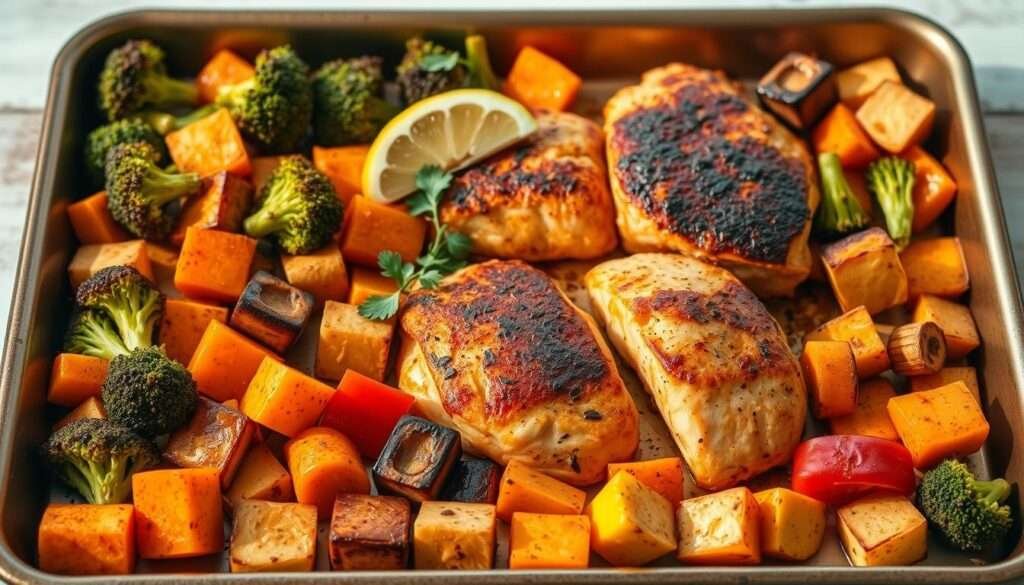
Egg roll in a bowl (ground chicken or turkey)
I quickly sauté ground chicken with garlic, ginger, and five-spice. Then I fold in broccoli slaw and scallions and finish with coconut aminos and rice vinegar.
Estimate: about 23–32 grams protein per serving. I keep slaw crisp and add sesame oil at lunch.
Ground beef and zucchini skillet
I brown lean ground beef, add zucchini, peppers, and onions, then season simply. I drain fat if needed and fold in spinach at the end.
Estimate: ~28 grams protein per serving; I portion over rice or quinoa for balance.
Honey mustard salmon sheet pan
I brush salmon with whole-grain mustard, lemon, and maple, then roast with broccolini and sweet potato. I underbake slightly so reheating stays tender.
Estimate: 28–33 grams protein per serving; lemon vinaigrette goes on at serving time.
Chicken bacon ranch sheet pan
I roast chicken, potatoes, and mixed veggies with a light ranch spice and finish with a yogurt-based ranch drizzle. I batch-cook two pans and rotate halfway for even browning.
Estimate: ~35 grams protein per serving; label portions for fast grabs.
| Recipe | Main protein | Protein per serving |
|---|---|---|
| Egg roll in a bowl | Ground chicken/turkey | 23–32 grams protein per serving |
| Beef & zucchini skillet | Ground beef | ~28 grams protein per serving |
| Honey mustard salmon sheet pan | Salmon | 28–33 grams protein per serving |
| Chicken bacon ranch sheet pan | Chicken | ~35 grams protein per serving |
Quick tips: I line pans with parchment for easy cleanup and reheat gently (microwave at 50–60% power). Add fresh herbs or citrus just before eating for brightness.
Soups, Stews, and Chilis That Reheat Like a Dream
A pot of simmering stew often becomes my week’s simplest, most reliable lunch. These one-pot options freeze well, travel easily, and deliver steady energy when I need it most.
White chicken chili / corn chowder (slow cooker)
- Core ingredients: shredded chicken, green chiles, white beans, corn (for chowder), stock, cream or Greek yogurt.
- Method: brown aromatics, layer spices and liquids in the slow cooker, add chicken and beans, then finish with lime and cilantro.
- Nutrition & storage: about 28 grams protein per serving; keeps 3–4 days in the fridge or freezes up to 3 months.
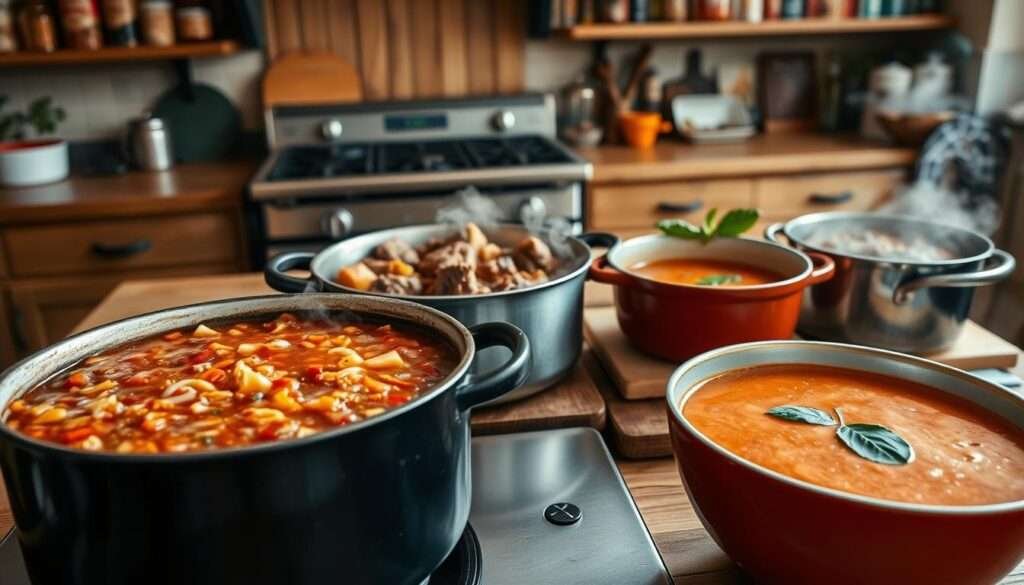
- Core ingredients: lean ground turkey or beef, tomatoes, mixed beans, onions, chili spices.
- Method: brown meat for depth, add tomatoes and beans, simmer until thick; portion into single-serve containers.
- Nutrition & storage: roughly 33–38 grams protein per serving; freezes perfectly for future lunches.
Chicken chile verde stew
- Core ingredients: shredded chicken, tomatillos, green chiles, stock, cumin, cilantro.
- Method: simmer gently, finish with lime; serve with warm tortillas and avocado for contrast.
- Nutrition & storage: about 26 grams protein per serving; refrigerate up to four days or freeze portions.
Smart assembly tips: I often place a scoop of rice or quinoa in containers, then ladle hot stew on top for balanced grab-and-go meals. I top bowls with Greek yogurt, cheese, or pumpkin seeds for extra texture and healthy fats.
For a plant-forward instant chili option, I also refer to this hearty vegan instant-pot chili when I want a freezer-ready, bean-forward recipe.
My Point-Wise Method: Weekend Meal Prep Workflow
I treat one two-hour session as my weekly reset, so weekdays run with minimal fuss and predictable energy.
Start by choosing three mains that hit 30+ grams protein per serving: I pick one salad, one bowl, and one skillet or sheet-pan recipe. That mix gives variety across the day and guarantees a solid protein base for each lunch.
- I write a short shopping list by section—proteins, grains, veggies, sauces—so I move fast in the store.
- I batch-cook proteins first, then let them rest while grains simmer and vegetables roast. This reduces total hands-on time.
- I chop crisp add-ins (cucumbers, cherry tomatoes, herbs) and store them separately so textures stay bright.
- I whisk two dressings (Greek vinaigrette and sesame-ginger) plus one creamy sauce like buffalo ranch for swapping across recipes.
- I assemble lunches in single-serve containers, leaving delicate greens and sauces in side compartments.
- I label each container with protein per serving, the date, and a short reheating note such as “add dressing after heating.”
- I align meals to my calendar—grab-and-go choices on my busiest day and reheat-friendly bowls when I have a slower midday.
- I keep one freezer-friendly pot (chili or stew) as a buffer for weeks when prep time disappears.
- I finish with a five-minute fridge tidy so meals sit front-facing and easy to grab during the day.
“Labeling with grams and reheating notes saved me endless guesswork; each lunch became a predictable win.”
| Step | Action | Why it matters |
|---|---|---|
| 1 | Pick three 30+ g mains | Ensures protein per serving goals are met every day |
| 2 | Batch-cook proteins, grains, roast veg | Saves time and keeps components interchangeable |
| 3 | Mix dressings and portion sauces | Keeps flavors fresh and prevents sogginess |
| 4 | Assemble, label with grams, date, reheating note | Makes weekday choices fast and reliable |
Quick tip: I use clear labels with protein per serving and a tiny reheating instruction. That small habit removes decision fatigue and helps me eat well every day.
Ingredients I Lean On for Speed and Protein Per Serving
My fridge stocks a few shortcut heroes that speed assembly and boost grams of protein per serving. These ingredients cut hands-on time and lift every lunch into a satisfying plate.
Rotisserie chicken, canned tuna/salmon, pre-cooked lentils and quinoa
Rotisserie chicken turns into salads, wraps, grain bowls, or quick soups and saves me 30–40 minutes of cooking.
Canned tuna or salmon mixes with olive oil, lemon, and herbs for instant sandwiches or lettuce cups. Pre-cooked lentils and quinoa let me build bowls in under ten minutes while adding fiber and steady protein.
Cottage cheese and Greek yogurt for creamy, high-protein swaps
I swap mayo with Greek yogurt or cottage cheese to make creamy dressings and salads that lift protein per serving. Single-serve Greek yogurt cups also double as dessert or sauce bases.
Nutritious egg salad riffs pair well with yogurt or cottage cheese for extra body and a protein boost.
Nuts, seeds, and hard-boiled eggs as quick add-ins
I keep a carton of hard-boiled eggs ready to slice over greens or pack as a snack. A small handful of nuts or seeds adds texture and staying power without reheating.
Frozen edamame is another fast option — a quick blanch adds color and plant protein to bowls. I often rebuild leftovers by adding one or two of these staples for a fresh, balanced meal.
- Quick prep tip: portion Greek yogurt or cottage cheese into small containers for dressings.
- Meal hack: combine pre-cooked quinoa, chickpeas, cucumbers, tomatoes, olives, and feta for a ten-minute Mediterranean bowl.
Flavor Boosters That Keep Lunches Exciting
I rely on a handful of sauces and finishing touches that require almost no extra cooking. They transform repeat recipes and make leftovers feel fresh.
My go-to sauces and quick ratios
- Greek vinaigrette: 3 parts olive oil, 1 part lemon, 1 tsp dried oregano. I drizzle it over chicken and chickpea salads and finish with a crumble of feta for richness.
- Sesame-ginger dressing: 2 parts rice vinegar, 1 part tamari or coconut aminos, 1 tsp grated ginger, dash sesame oil. It lifts slaws and grain bowls without extra cooking.
- Buffalo toss: 2 parts hot sauce, 1 part melted butter or yogurt for a lighter version. I toss grilled chicken in this and serve with a yogurt-dill drizzle for balance.
- Quick curry sauce: 1 tbsp curry paste into 3 tbsp Greek yogurt or coconut milk. Spoon over roasted veg, chickpeas, or shredded chicken for warming spice.
- Simple peanut sauce: 2 tbsp peanut butter, 1 tbsp lime, 1 tbsp soy or tamari, touch of honey and water to thin. It coats noodles, grains, or lettuce wraps with no fuss.
Accents that add variety fast
Herbs: Dill, cilantro, basil, and mint refresh bowls and salads in seconds.
Citrus & pickles: Lemon or lime cuts richness; quick pickles wake up cold dishes.
Spice blends & heat: Keep Greek, taco, five-spice, and garam masala on hand. Add chili crisp or crushed red pepper when I want crunch and heat without extra prep.
“A small jar of sauce and a handful of herbs make repetitive menus feel new.”
| Flavor | Quick ratio | Best use |
|---|---|---|
| Greek vinaigrette | 3:1 olive oil:lemon + oregano | Brightens chicken and chickpea salads; finish with feta |
| Sesame-ginger | 2:1 rice vinegar:tamari + ginger, sesame oil | Transforms slaws and protein bowls |
| Peanut sauce | 2 tbsp peanut butter:1 tbsp lime + soy, thin with water | Coats noodles, grains, and wraps |
Practical tip: I portion sauces into mini containers so each serving keeps texture and I can mix flavors on the fly.
Storage, Safety, and Reheating Tips I Follow
I treat storage as part of the recipe — cooling and labeling are non-negotiable steps. Good habits keep my meals safe, flavorful, and ready on hectic days. I focus on quick cooling, clear containers, and simple reheating rules so nothing feels like a guess.
Cooling and container choices
Chill quickly: I spread hot food in shallow layers so it cools fast before sealing. I use glass containers with tight lids and label each with the date and grams per serving.
Keeping texture and safety
- I pack sauces, dressings, and crunchy toppings separately so salads and wraps stay crisp.
- I keep leafy greens, cucumbers, and tomatoes chilled and separate, then toss with warm components right before eating.
- I line greens with a paper towel to absorb moisture and prolong freshness.
Reheating and rotation
I reheat proteins and grains at 50–60% microwave power or gently on low stovetop heat to keep protein tender. I portion soups and chilis into single servings and cool completely before refrigerating or freezing.
Rotate within four days: I place the most perishable lunches at the front of the fridge and move newer meals behind them so I use older food first.
| Action | Why it matters | Quick tip |
|---|---|---|
| Shallow cooling | Prevents bacterial growth | Spread food thinly before sealing |
| Separate sauces | Preserves texture | Use small containers or compartments |
| Label & date | Helps rotation and safety | Include grams and “use by” within four days |
“A small label saved me from guessing and kept every mid-day plate reliable.”
Build-Your-Own High-Protein Lunch Formula
I use a simple template that lets me build balanced bowls fast from whatever is in my fridge. The goal is a predictable mix that hits protein and fiber targets without fuss.
Protein + grain + veggies + fat + flavor = balanced bowl
My modular formula:
- I start with a palm-sized protein: chicken, salmon, tuna, tofu, or tempeh.
- I add a cupped-hand of cooked grain like quinoa, brown rice, or farro.
- I fill half the bowl with veg — greens, cucumbers, peppers, broccoli, or carrots.
- I include a thumb of healthy fat: olive oil, avocado, nuts, or seeds.
- I finish with bold flavor: Greek vinaigrette, sesame-ginger, curry, or peanut sauce.
Per serving targets: grams protein per serving and fiber goals
Targets I aim for: 30–50 grams protein per serving and 8–12 grams of fiber. I hit fiber by adding beans, lentils, or extra veggies.
Quick examples I remix often:
- Grilled chicken + quinoa + roasted broccoli + avocado + lemon Greek dressing.
- Salmon + brown rice + crunchy slaw + sesame seeds + ginger-scallion sauce.
- Tofu + farro + cucumbers and tomatoes + olives + herby yogurt sauce.
I reuse leftovers by swapping the grain or sauce so each bowl feels new without extra cooking.
| Component | Portion cue | Why it matters |
|---|---|---|
| Protein | Palm-sized | Hits grams protein per serving goal |
| Grain | Cupped-hand | Provides steady energy |
| Veggies | Half the bowl | Adds fiber and volume |
| Fat & Flavor | Thumb + drizzle | Keeps you full and makes bowls exciting |
Weight and Wellness: How I Use High-Protein Lunches
I treat midday plates as a tool for steady satiety and realistic weight management. A focused lunch helps me feel full, keeps cravings down, and supports the workouts that matter for body composition.
Protein plus fiber for fullness; simple portion cues that work
I pair protein with fiber-rich foods—veggies, beans, or whole grains—because that combo holds me between meals. When my lunch lands between 26–40+ grams protein, I notice fewer midafternoon energy dips.
- I use easy visual cues: a palm of protein, a fist of veggies, a cupped hand of grains, and a thumb of healthy fat.
- I scale lunch size by activity: bigger on training days with a grain, lighter with extra veg on easy days.
- I front-load some mornings with a protein-rich breakfast so the rest of the day is easier to manage.
When I add a high-protein snack to bridge the afternoon
If dinner will be late or meetings run long, I add a small snack with about 20 grams protein. My go-tos are Greek yogurt, cottage cheese, jerky, or a tuna pouch with crackers.
Small habits I track weekly: energy, mood, and how clothes fit. Consistency beats perfection—hitting targets most days nudges weight and wellness in the right direction.
| Habit | Why it matters | Quick tip |
|---|---|---|
| Protein + fiber | Increases fullness and steady energy | Include beans or a big salad |
| Snack ~20 g | Bridges long afternoons | Prep single-serve Greek yogurt |
| Adjust by training | Matches fuel to effort | Add a grain on heavy days |
“Hitting a solid protein target at lunch kept my afternoons steady and helped weight trends stay consistent.”
Time-Savers and Tools That Make Prep a Breeze
A few small tools turn a two-hour weekend session into a week of ready lunches. The right appliances and habits cut hands-on time and keep flavors consistent.
Slow cooker and sheet pans for hands-off cooking
I rely on a slow cooker for set-and-forget proteins like shredded salsa chicken, white chicken chili, butter chicken, or chicken corn chowder.
Sheet pans let me roast honey mustard salmon and chicken bacon ranch at once. Using two rimmed pans halves oven time and keeps recipes moving.
Quality cookware and sharp knives for faster prep
- Sharp chef’s and paring knives: safer cuts are faster cuts; chopping feels quick.
- Heavy-bottomed, non-toxic pans: they brown protein evenly and avoid sticking.
- Small multicooker: I batch-cook rice or quinoa while the oven runs.
- Stackable glass containers: clear, leakproof lids save space and speed grabs.
- Pre-labeling and compost bowl: label before filling and keep a compost bowl on the counter for tidy momentum.
- Clean as you go: I load the dishwasher during roasting cycles so the kitchen is ready when I finish.
- Reuse sauces: one sesame-ginger or vinaigrette batch transforms many meals through the week.
| Tool | Primary use | Quick tip |
|---|---|---|
| Slow cooker | Shredded chicken, chilis, stews | Set low and portion into single-serve containers |
| Rimmed sheet pans (x2) | Roast proteins and veg together | Rotate pans halfway for even browning |
| Multicooker | Batch-cook rice or quinoa | Use for grains while oven handles mains |
| Sharp knives & heavy pans | Faster chopping and even searing of protein | Keep blades honed and pans preheated |
“Good gear and a simple routine save me time and keep every lunch reliable.”
Conclusion
Here’s a quick recap that keeps your weekdays fed, focused, and fuss-free.
I plan, shop, and cook once so classic picks—Greek chicken salad (~50 g), teriyaki salmon bowl (~40 g), egg roll in a bowl (23–32 g), turkey pesto sandwich (~31 g), beef-and-bean chili (~38 g), and chicken chile verde (~26 g)—are ready all week.
I aim for 30–50 grams of protein at midday and build each meal around a reliable anchor like chicken, salmon, tuna, tofu, or beans.
I rotate salads, bowls, wraps, skillets, sheet-pan dishes, and soups so textures and flavors stay fresh. I use sauces, simple recipes, and quick boosters like Greek yogurt and pre-cooked grains.
I batch-cook proteins, roast veg, and cook a grain, then assemble with sauces and fresh greens just before eating. Label containers with protein, date, and reheating notes so every lunch is an easy choice.
I hope these high-protein lunch ideas help you eat well and enjoy every midday bite.