
Table of Contents
ToggleI still remember the days I skipped a proper breakfast and hit noon exhausted and cranky. I learned that a small shift — aiming for about 30 grams protein early in the day — changed how I felt and how long I stayed full.
In this guide, I share quick, real-world recipes that balance protein and low calories. Each idea lists what to use, an estimate of grams protein per serving, and a calorie range so you can pick meals that match your goals.
My focus is on practical staples like Greek yogurt, eggs, beans, and oats. I also give styling tips—think bright berries and simple plating—so your food looks like something you can make on busy mornings.
Whether you want better satiety, support for weight loss, or a more consistent routine, these recipes make the first meal of your day easier and more satisfying.
Why a high-protein breakfast changes your day
A small habit change—aiming for roughly 30 grams of protein at the first meal—made my mornings steadier and my cravings less frequent.
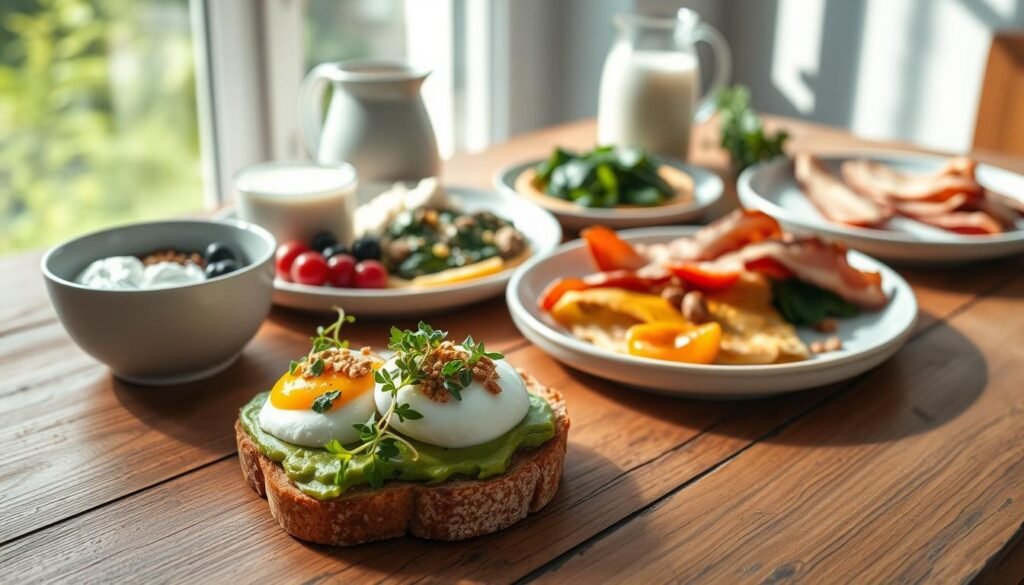
Research snapshots show that about 30 grams protein at breakfast helps boost fullness and cuts later cravings. Many people load most protein at dinner, so moving grams protein earlier can smooth appetite through the afternoon.
What counts as higher protein and why it helps
Practically, a high protein meal uses concentrated sources like Greek yogurt, eggs, cottage cheese, beans, or quinoa. A cup of Greek yogurt has ~23 grams; an egg adds ~6 grams; half-cup cottage cheese is ~12 grams.
- More fullness: protein raises satiety and can tame mid-morning snacks.
- Weight and muscle: protein supports weight loss efforts and helps preserve muscle when paired with exercise.
| Food | Typical grams protein | How it helps at breakfast |
|---|---|---|
| Greek yogurt (1 cup) | 23 g | Quick base for bowls and smoothies |
| Egg (large) | 6 g | Versatile, pairs with veggies or beans |
| Cottage cheese (½ cup) | 12 g | Creamy, mixes with fruit or toast |
| Beans (½ cup) | 7 g | Great for savory wraps and bowls |
I keep things practical: a protein anchor plus produce and whole grains. For recipe ideas that hit higher protein easily, see my favorite waffle recipe with a big protein hit: protein waffle recipe.
How I planned these 15 recipes for satiety, flavor, and speed
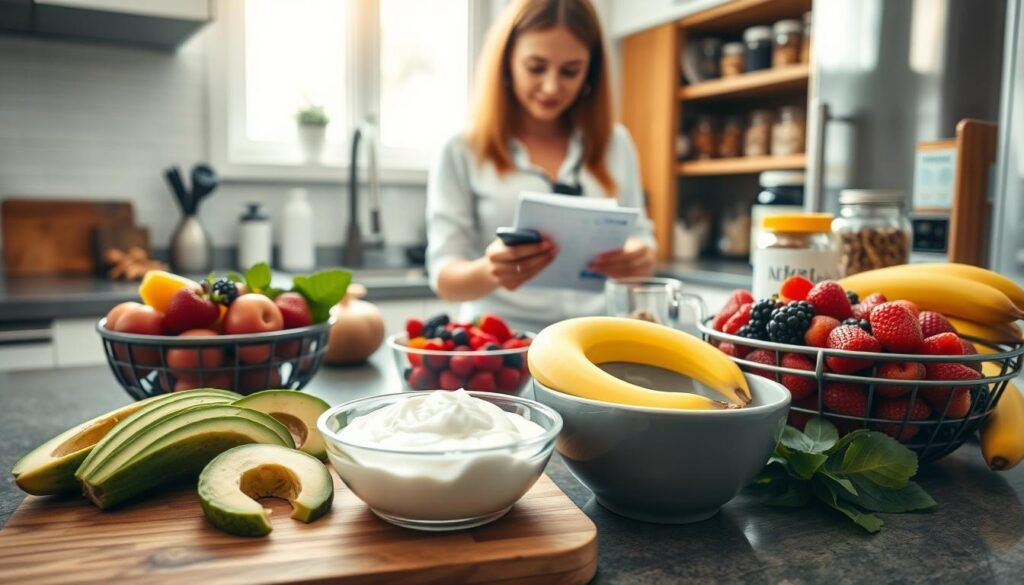
I designed each recipe with real mornings in mind: short prep, clear protein targets, and big flavor. My aim was practical — hit meaningful protein while keeping calories mindful and ingredients simple.
Nutrition criteria and quick benchmarks
Minimum floor: roughly 15 grams protein per serving so each meal keeps you satisfied without excess calories. I note grams protein and approximate calories for every recipe.
- Protein anchors: Greek yogurt, eggs, tofu/soy, cottage cheese, beans, or quinoa.
- Fiber boosts: oats, chia, fruit, and veggies for lasting fullness.
- Speed moves: overnight oats, egg muffins, and freezer burritos save prep time.
| Ingredient | Typical grams | Role |
|---|---|---|
| Greek yogurt (1 cup) | 23 g | Primary protein base |
| Egg (large) | 6 g | Quick, versatile protein |
| Chia (2 Tbsp) | 5 g | Fiber and texture |
| Beans (½ cup) | 7 g | Savory protein boost |
I keep added sugars low and use natural sweetness from berries and bananas. When cheese fits, I add a small crumble for flavor without heavy calories. For a fun swap or batch idea, try my high-protein pancake muffins for grab-and-go variety.
15 Protein-Packed, Low-Calorie Breakfasts to Start Best Morning
Real mornings need honest portions, solid protein, and minimal fuss. Below I list quick ideas with what to use, grams protein, calories, and a single image cue so you get true portions and styling notes.
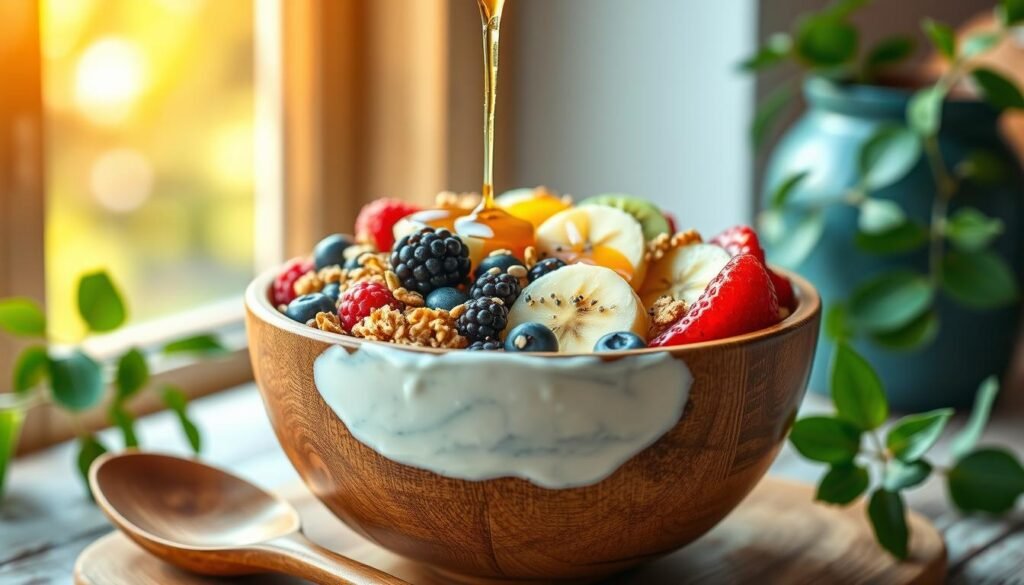
- Greek Yogurt Bowl with Berries & Honey — Use 3/4–1 cup Greek yogurt, 1/2 cup berries, walnuts; ~20–25 g protein, ~250–350 cal. Image cue: shallow bowl, honey swirl in soft light.
- Spinach Feta Egg Muffins — 6 eggs, 1 cup spinach, 1/3 cup feta; ~7–8 g protein per muffin (two muffins ~14–16), ~80–90 cal each. Image cue: cooling rack, cut-open muffins.
- High-Protein Smoothie — 1 cup milk, 1/2 banana, 1/2 cup berries, 1/2 cup yogurt, optional protein powder; ~20–30 g protein, ~250–350 cal. Image cue: clear glass showing texture.
- Savory Mediterranean Scramble — 2 eggs, 1 tsp olive oil, 1/2 cup mixed veggies, 1–2 Tbsp cheese; ~16–20 g protein, ~250–320 cal. Image cue: plated scramble with herb leaves.
- Whole Grain Toast with Nut Butter & Fruit — 1 slice toast, 1–2 Tbsp nut butter, banana; ~8–12 g protein, ~220–300 cal. Image cue: overhead single slice with fruit coins.
- Chia Pudding with Almond Milk & Berries — 2 Tbsp chia, 1/2 cup almond milk, berries; ~5–8 g protein, ~180–260 cal. Image cue: small jar, gelled chia with berries on top.
- Avocado Toast with Tomato & Olive Oil — 1 slice toast, 1/4 avocado, tomato; ~6–18 g protein depending on add-on, ~220–320 cal. Image cue: single slice on small plate, thin even layer.
- Tofu Scramble with Spinach & Bell Peppers — 6–7 oz firm tofu, veggies, turmeric; ~20–25 g protein, ~250–320 cal. Image cue: crumbled tofu with colorful peppers.
- Savory Cottage Cheese Toast — 1 slice toast, 1/2 cup cottage cheese, cucumber, tomato; ~14–16 g protein, ~220–280 cal. Image cue: creamy spread edge-to-edge with crumbs for realism.
- Oatmeal with Dried Figs, Walnuts & Cinnamon — 1/2 cup oats, figs, walnuts, 1/4 cup Greek yogurt; ~10–18 g protein, ~280–360 cal. Image cue: side angle showing yogurt melting into oats.
- Quinoa Breakfast Bowl with Apples & Walnuts — 3/4 cup cooked quinoa, apple, splash milk; ~10–14 g protein, ~280–360 cal. Image cue: compact bowl with visible grains.
- Low-Cal Breakfast Burrito Wraps — small whole-wheat tortilla, 1 egg, 1/4 cup black beans, veggies; ~18–25 g protein, ~300–380 cal. Image cue: sliced on the bias, wrapped in parchment.
- Mediterranean Smoothie Bowl — 1/2–3/4 cup Greek yogurt, 1/2 cup fruit, splash milk, nuts/seeds; ~18–25 g protein, ~300–380 cal. Image cue: minimal stripe of toppings on thick bowl.
- Spinach & Chickpea Sauté with Egg — 1 cup spinach, 1/2 cup chickpeas, 1 egg on top; ~17–20 g protein, ~280–340 cal. Image cue: skillet shot with single egg.
- Whole Grain Banana Pancakes — small stack, whole-grain mix, 1/4 cup Greek yogurt folded in; ~12–18 g protein, ~300–380 cal. Image cue: three small pancakes with banana slices.
Ingredient notes to make every recipe work harder for you
I’ve learned a few pantry swaps that let a simple bowl or scramble deliver more staying power.
Smart swaps: Greek yogurt, soy milk, and whey for extra protein
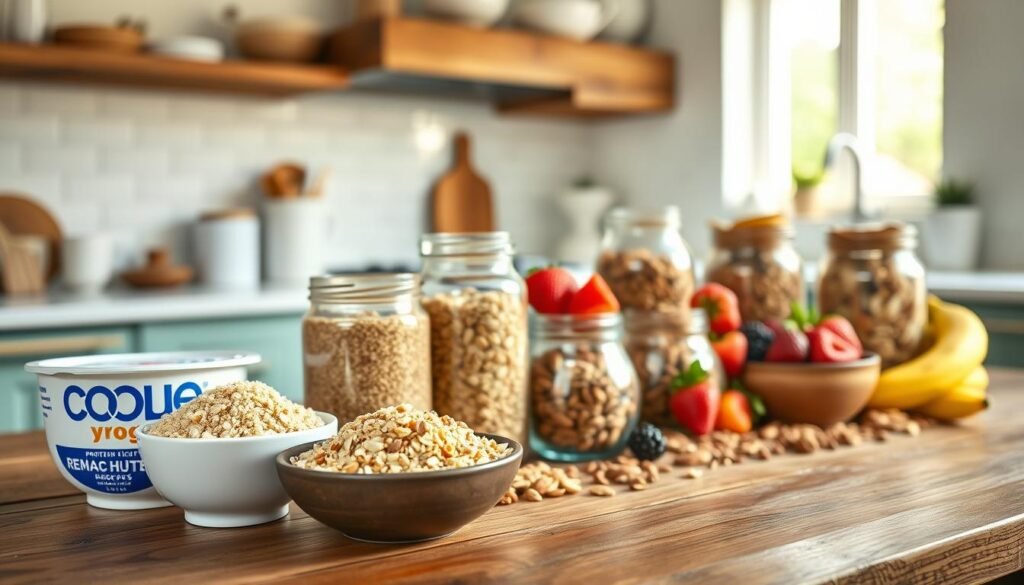
Greek yogurt jumps protein without changing texture — a cup offers ~23 g protein and lifts bowls, pancakes, or batter with no fuss.
If I’m blending, I use soy or dairy milk as a protein base and add a half-scoop of unflavored protein powder when I want an easy boost.
Fiber and fullness: oats, chia seeds, and whole grains
For lasting fullness I stir in oats or 2 Tbsp chia seeds. That adds about 5 g protein and roughly 10 g fiber, thickens texture, and stretches portions.
- I swap regular yogurt for greek yogurt in bowls and smoothies for higher protein.
- Cottage cheese can blend into batters or act as a savory spread for extra protein and creaminess.
- Almond options add flavor; I pair them with a separate protein source so totals meet my goals.
- I keep unflavored powder on hand so fruit flavors shine while totals rise.
| Ingredient | Typical protein | Why I use it |
|---|---|---|
| Greek yogurt | ~23 g per cup | Easy protein base for bowls and baking |
| Chia seeds (2 Tbsp) | ~5 g | Adds fiber, thickens, and boosts fullness |
| Protein powder | Varies (half-scoop adds 10–15 g) | Quick bump in smoothies without extra flavor |
For a ready high-protein oatmeal upgrade, try my high-protein overnight oats for a fast, filling option.
Realistic recipe images: how I style and what to capture
When I frame a recipe, I aim for images that look like something people can actually make. I shoot in the morning near a window so colors stay true and textures read well.
Natural light, minimal props, and true-to-life portions
Keep it honest. Use one plate, a plain napkin, and a spoon so the food remains the star. Small, real portions invite the reader to try the recipes.
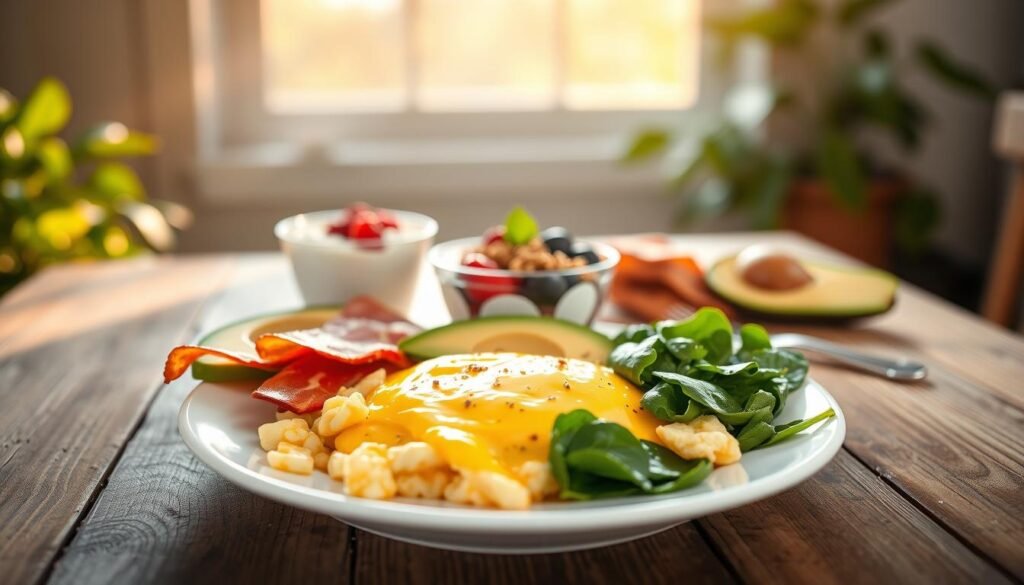
- I shoot near a window for soft light and minimal shadows; it saves editing time.
- Clear vessels show liquid texture for smoothies and puddings, while shallow bowls suit yogurt and cereal.
- Cut burritos on the bias and wrap in parchment for an authentic grab-and-go look.
- Skillet shots with a wooden spatula tell a quick-cook story and show real color and fond.
- Use light edits only: white balance and a slight exposure lift keep flavor honest.
| Image cue | Best vessel | Quick tip |
|---|---|---|
| Smoothie | Clear glass | Show thickness with condensation |
| Yogurt bowl | Shallow bowl | Swirl yogurt, add seeds |
| Wrap or burrito | Parchment wrap | Slice on the bias |
For a savory example that photographs well, try my cottage cheese scramble recipe linked here: cottage cheese scramble. Small styling choices save time and make food feel attainable and full of flavor.
Protein math made easy without obsessing over numbers
I break breakfast into easy protein chunks that stack up without a scale or app. I use a couple of reliable anchors and mix one smaller add-on. That gets me near 30 grams protein fast.
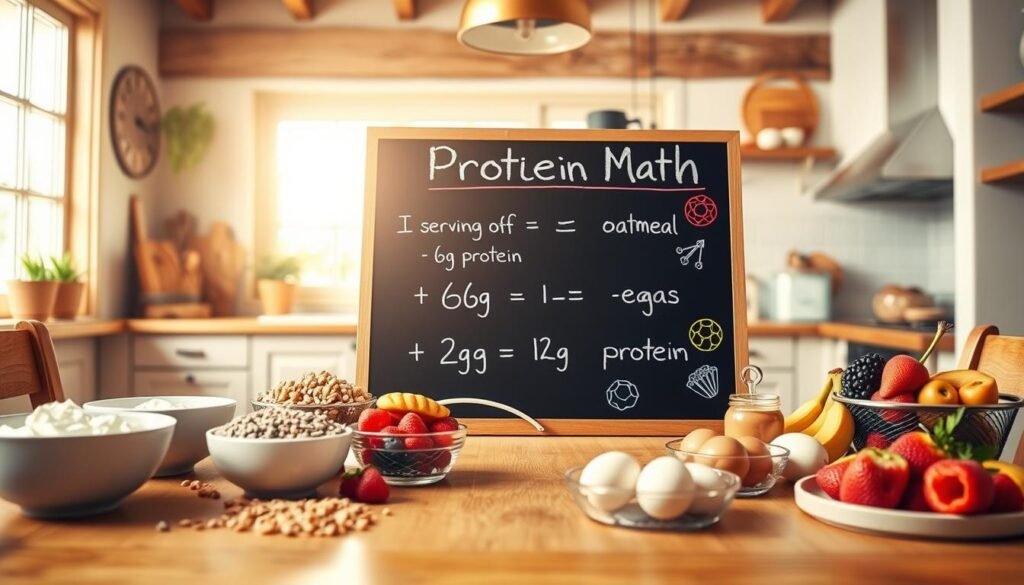
- Greek yogurt (~23 g per cup) plus a sprinkle of nuts often hits your target per serving with no fuss.
- Two eggs (~12 g) plus 1/2 cup beans (~7 g) and a little cheese lands you in the high protein zone.
- Blends: 1 cup milk + 1/2 cup yogurt stacks protein; a half-scoop of powder nudges smoothies toward ~25 grams protein.
- Cottage cheese (~12 g per 1/2 cup) is a stealth add-in for toast, bowls, or smoothies.
| Anchor | Approx grams protein | Quick use |
|---|---|---|
| Greek yogurt (1 cup) | 23 grams protein | Bowls, smoothies, pancakes |
| Eggs (each) | 6 grams | Scrambles, muffins, wraps |
| Cottage cheese (½ cup) | 12 grams | Toast, blend-in, snack |
| Tofu / quinoa bowl | ~25 grams | Plant-forward scrambles or bowls |
My rule: include at least two protein contributors so you hit the number without weighing or logging. If you want a grab-and-go idea, try the oatmeal raisin protein cookies for a simple extra serving after a workout. Over time these combos become second nature and keep your day steady.
Make-ahead and meal prep strategies for busy mornings
I batch a few simple meals on Sunday so weekday mornings feel effortless. That small time investment saves minutes and keeps my protein and grams consistent during the week.
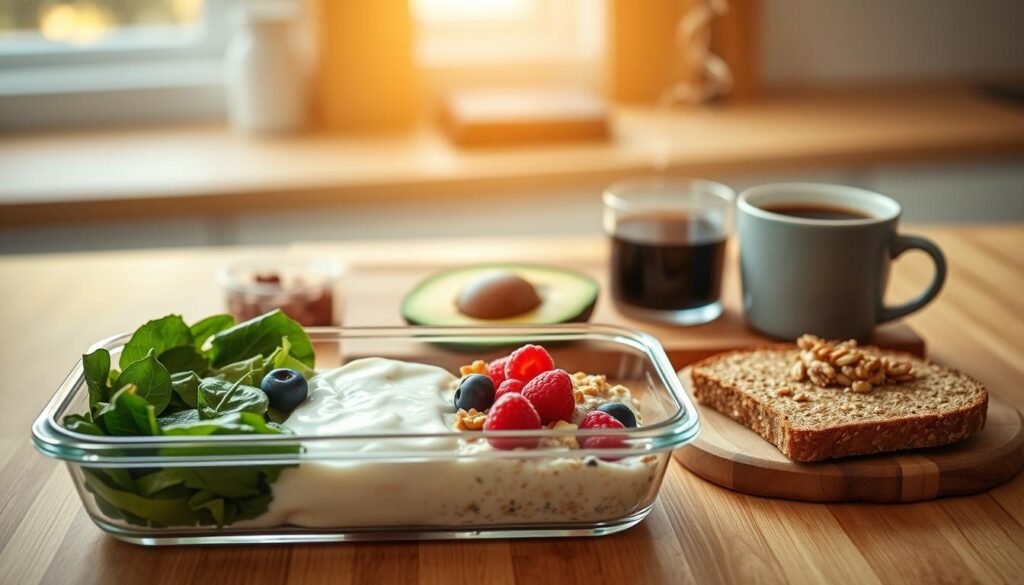
Overnight oats and chia pudding set in jars and are ready by morning. I keep toppings separate and add nuts or seeds right before eating for crunch.
Egg muffins are great for portion control. I bake a tray, cool, then refrigerate for 3–4 days or freeze for longer. A toaster oven reheats quickly.
Freezer burritos are my grab-and-go fix. I wrap them in parchment, freeze in a bag, and reheat straight from frozen. A quick skillet or toaster crisps the tortilla.
- I rotate fillings: beans and veggies or eggs with a sprinkle of cheese for variety and protein.
- I label jars and wraps with the date so I use each meal within its best window.
- Keep frozen fruit and shelf-stable milk on hand as backup for last-minute oats or smoothies.
For more batch-friendly recipe ideas, see this short collection of protein options at protein-packed recipes.
Seasonal and Mediterranean-inspired flavors for breakfast
I layer small Mediterranean touches over basic recipes so they taste like a treat, not a chore. A splash of good olive oil, a crumble of feta cheese, or a few olives can flip a simple bowl or toast into something memorable.
I use seasonal fruit—berries in summer, apples in fall—and herbs like dill, basil, or mint to refresh yogurt, cottage spreads, and oatmeal. For a creamy note, I add avocado or a scoop of cottage cheese alongside a protein anchor.
Warm spices in winter and citrus zest when citrus peaks brighten chia pudding and quinoa bowls. I also keep pantry staples—chickpeas, olives, and almonds—on hand for quick Mediterranean bowls topped with a fried egg.
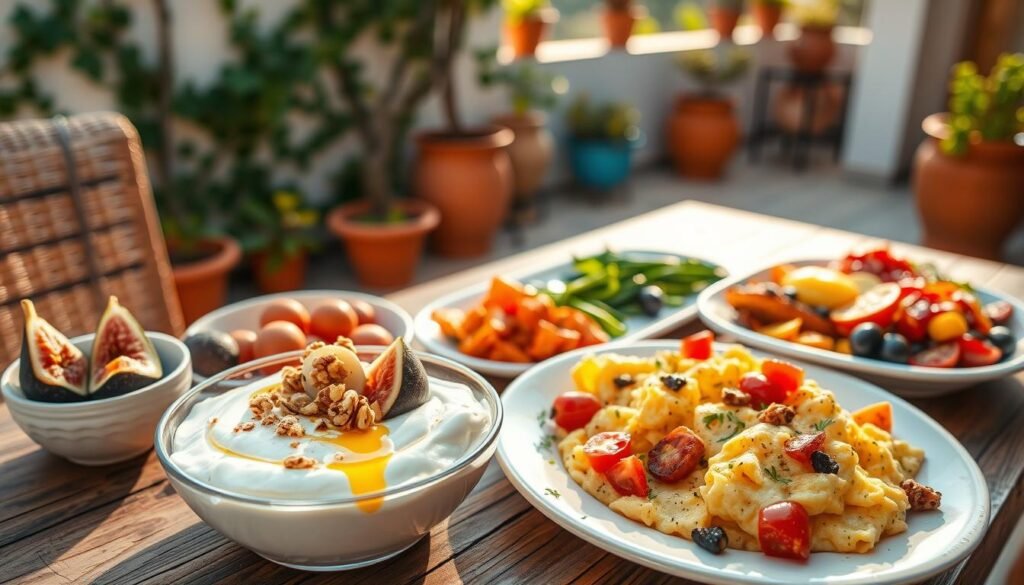
- I swap fruits by season for smoothies and bowls so the base recipe stays the same while the produce sings.
- A sprinkle of almond slices or walnuts adds crunch without masking delicate flavors.
- Try a curated list of Mediterranean recipe ideas or themed bowls like these quick keto bowl recipes for inspiration.
| Season | Key add-ins | Why it works |
|---|---|---|
| Summer | Berries, fresh basil, olive oil | Bright acidity and color lift yogurt and smoothie bowls |
| Fall | Apples, walnuts, cinnamon | Warm spice and crunch suit oats and quinoa bowls |
| Winter | Citrus zest, cardamom, almonds | Zest and warm spice brighten creamy chia or cottage blends |
| Year-round | Chickpeas, feta, avocado | Savory staples that add texture and steady protein grams |
Tools, utensils, and kitchen accessories you’ll need
I keep a short toolkit on the counter so breakfast prep never feels like a production. A few good tools cover smoothies, oats, pancakes, and eggs with minimal fuss.
I rely on a blender for creamy smoothie bowls and a nonstick skillet for easy scrambled eggs. A muffin tin makes egg muffins quick and uniform.
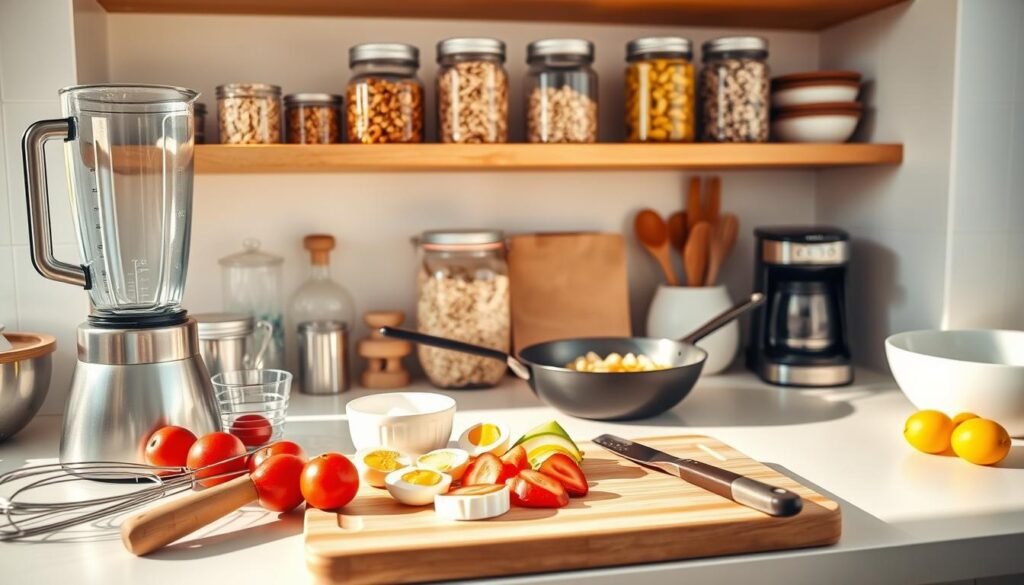
- Measure once: measuring cups, spoons, and a digital scale help me hit grams and repeat the same result every day.
- Prep fast: jars, mixing bowls, and a sharp chef’s knife speed prep and store make-ahead oats or parfaits.
- Finish well: a toaster and spatula handle toast and pancakes, while a baking sheet toasts nuts for bowls.
| Tool/Accessory | Why you need it | Recipes it supports |
|---|---|---|
| Blender | Smooth, creamy texture | High-Protein smoothie, Mediterranean Smoothie Bowl |
| Nonstick skillet & spatula | Even cooking with less oil | Scrambles, Tofu Scramble, scrambled eggs |
| Muffin tin & mixing bowls | Batch portions and batter mixing | Spinach Feta Egg Muffins, pancakes |
| Measuring cups/spoons & digital scale | Accurate portions and grams | All recipes |
| Mason jars, baking sheet, toaster | Overnight storage, toasting nuts, crisp toast | Chia & overnight oats, toast, rice bowl sides |
Keep gear minimal and reliable. For a savory bowl idea that pairs well with these tools, see my healthy beef and pepper rice bowl as a template for prep and storage.
Nutrition guardrails: protein with balance, fiber, and healthy fats
A clear set of nutrition guardrails helps me plan each plate with purpose.
I prioritize lean protein sources like low-fat dairy, beans, lentils, tofu, and chicken while filling most of the plate with colorful produce and whole grains for fiber and key nutrients.
I use milk or fortified alternatives and oats to steady digestion and keep energy even. Small amounts of seeds and nuts add healthy fats and texture without blowing calorie goals.
I keep cheese portions modest — a sprinkle of cottage cheese or a light crumble of cheese adds flavor while managing saturated fat and sodium. Eggs remain a go-to, but I rotate in fish and plant proteins across the week.
- If weight loss or muscle maintenance is the aim, I focus on volume from veggies and a reliable high protein anchor at breakfast each day.
- I view grams protein as a helpful guide, not a rigid rule, and adjust portions based on hunger and activity.
- People with kidney disease or risk factors should consult their doctor before increasing protein, since needs vary.
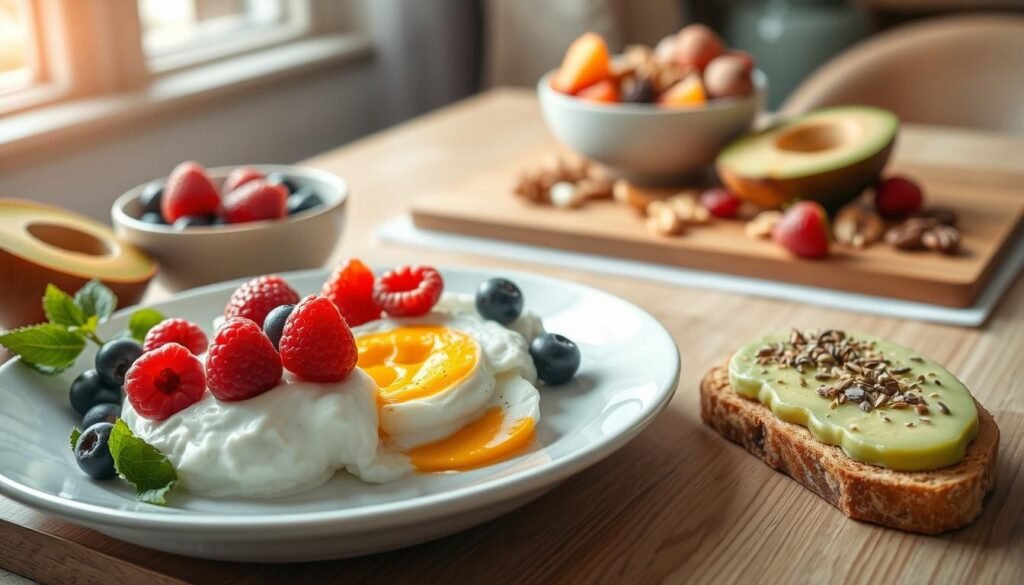
| Focus | Examples | Why it matters |
|---|---|---|
| Lean protein | Greek yogurt, eggs, chicken, lentils | Supports muscle and satiety with fewer calories |
| Fiber & carbs | Oats, whole grains, fruit, vegetables | Slows digestion and steadies blood sugar |
| Healthy fats | Seeds, nuts, avocado | Adds satisfaction and helps absorb micronutrients |
Keyword strategy and internal linking plan
My internal linking plan is built around natural recipe clusters that match how people search and cook. I map primary and secondary phrases across the list so each page supports the site’s main intent: a solid protein breakfast experience.

I group content by anchor ingredient and technique. Sweet bowls (yogurt, oats, chia seeds) link together. Savory pages (scrambles, burritos, chicken add-ins) form a second cluster. Smoothie and overnight guides sit at the center as versatile bridges.
- I use clear anchor text like “grams protein in smoothies” or “overnight oats step-by-step” for click clarity.
- Each recipe links to a deeper technique page (smoothie guide, mixer tips, or batch-cook egg muffins).
- Category tags—breakfast, oats, pancakes, yogurt—help navigation and search signals.
| Anchor | Target page | Primary focus |
|---|---|---|
| Greek yogurt | yogurt guide | protein and swaps |
| Smoothie | smoothie tutorial | blend tips & protein powder |
| Overnight oats | oats primer | storage and grams protein |
I add lightweight recipe schema for steps, time, and nutrition and review links quarterly so readers always find fresh, useful recipes and related articles like an oatmeal primer or a pancakes batter tweak.
Ready to cook a better morning
Pick one simple recipe and see how a protein-forward breakfast nudges your energy each morning.
I suggest a quick smoothie with milk and yogurt or a yogurt bowl with berries and nuts as an easy first try. Another fast option is an egg-and-bean burrito or cottage cheese toast with veggies.
Keep it practical: a spoonful of peanut butter on whole-grain toast with banana is fast and satisfying. Batch a couple of egg muffins or a jar of chia tonight and you’ll save time tomorrow.
I find that small, regular choices make a big difference. Pick one meal, repeat it a few times, and notice how your day changes.